The line from the meter to your house
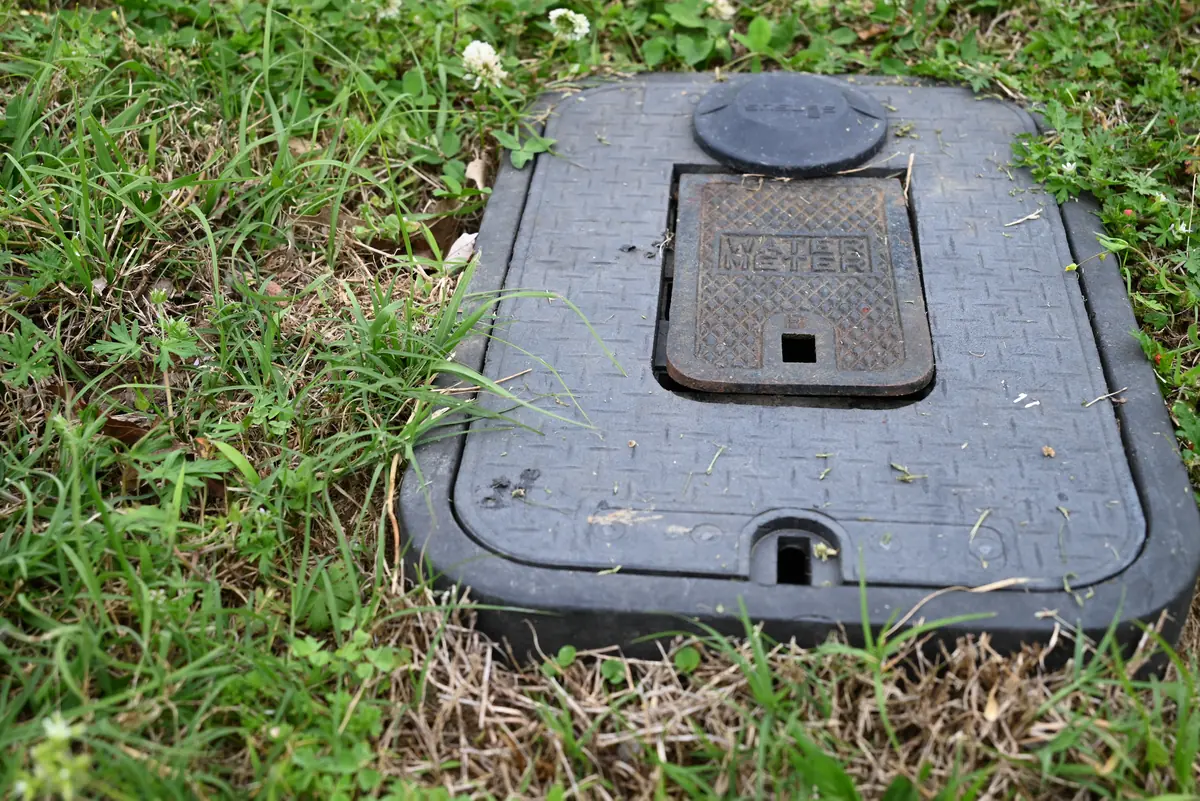
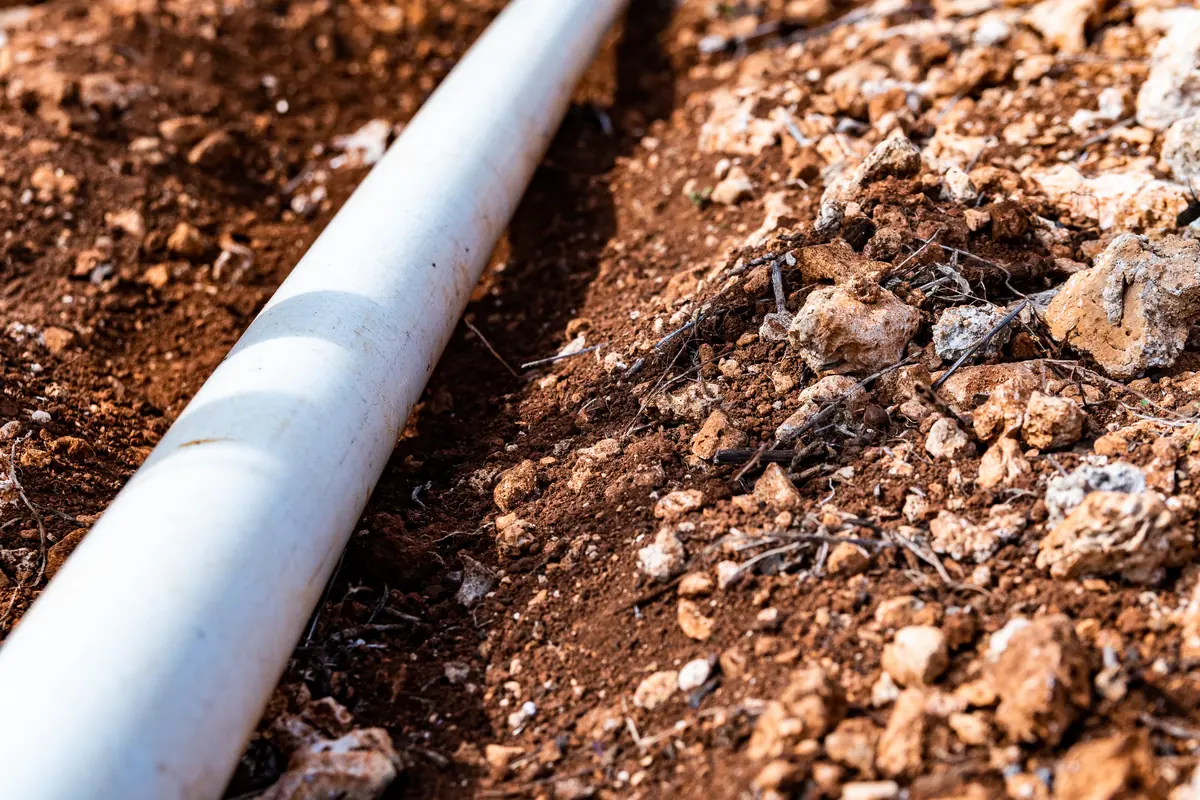
The buried pipe from the water meter to your house is the service line, or yard line. The water provider usually owns the meter and the street side, and the line from the meter to the house is yours.
In the rural parts of our Fannin County service area, the meter often sits out by the road, so that line can be long. Any leak past the meter runs through it, and you pay for that water.
North Texas clay swells when it's wet and shrinks in a drought, which is hard on old pipe. We dig at the leak and repair that section, or replace the whole run if the line is brittle or already patched in several places.
Signs your yard line is leaking
A yard line leak can soak into the ground for weeks before anyone notices.
- A wet spot or a greener strip of grass in dry weather
- A soft, low place in the yard that never dries out
- A water bill that jumps when nothing changed at the house
- Weaker pressure at every faucet
Our leak detection page shows how to check your meter and tell a yard line leak from one inside the house.
Burst and frozen pipes
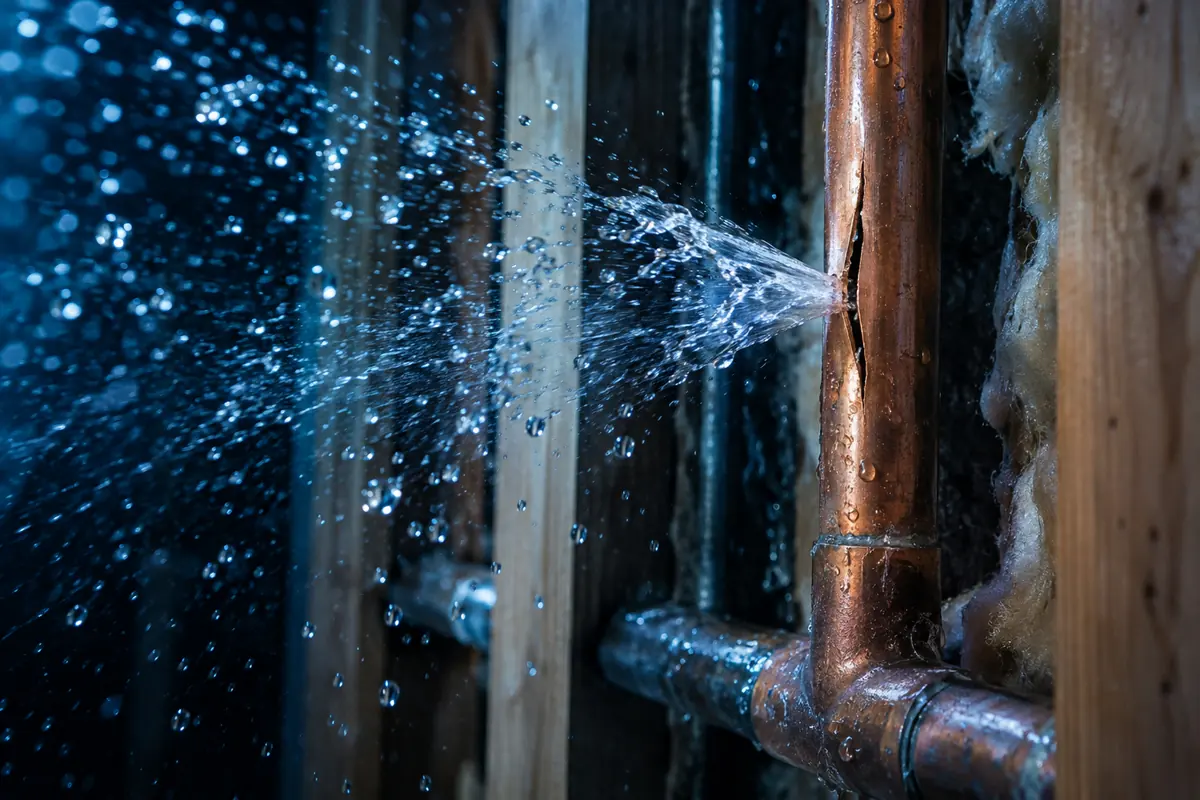
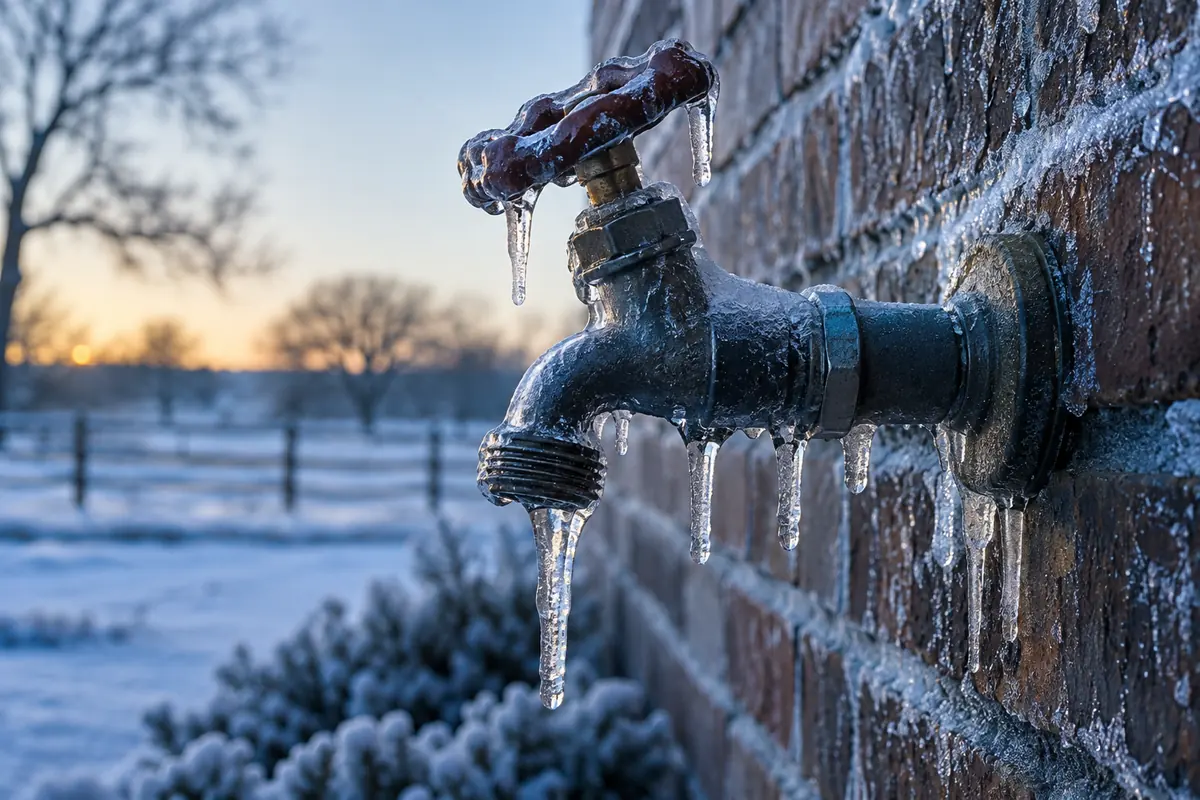
Water expands as it freezes. Once ice blocks a pipe, pressure builds in the water trapped between the ice and a closed faucet, and that's usually where the pipe splits. It often won't leak until it thaws.
That's how February 2021 went across Texas: days below freezing, then split pipes in attics, garages and outside walls leaking all over the state once things thawed.
We find the break, replace the damaged pipe and check the rest of the run for more splits before the water goes back on. If a pipe froze because of where it runs, we can move it or insulate it. If water is spraying now, shut off the main and see what to do in a plumbing emergency.
Getting ready for a hard freeze
A few cheap steps prevent most freeze damage. Our freeze prep guide for Fannin County homes has the full list.
Start outside
Unhook garden hoses and cover outside faucets. A connected hose traps water in the faucet, where it freezes and splits it.
Wrap exposed pipe
Insulate pipe in the attic, garage and crawl space, and where the line leaves the ground at the house. On rural places, include the barn or well house.
Drip on the coldest nights
When the forecast calls for the low 20s or colder, drip cold water from faucets on outside walls and open the cabinets under those sinks. Keep the heat steady day and night, and at 55 degrees or higher if you leave town.
Know your main shutoff
Find it and make sure it turns before the cold hits.
Why is my water pressure low?
Low pressure at every faucet usually comes from old galvanized pipe, a main valve that isn't all the way open, a failing pressure regulator or a leak in the yard line. If it's only one faucet, unscrew the aerator on the spout and rinse out the grit. If that doesn't fix it, it's a faucet repair.
Galvanized steel pipe was common in houses built before the 1960s. It rusts from the inside, and rust and scale slowly close it down. Brown water after the pipes sit unused is another sign.
Patching galvanized buys time, but the rest of the pipe is just as old, so weak pressure all over the house usually means it's time to repipe.
Whole-house repiping
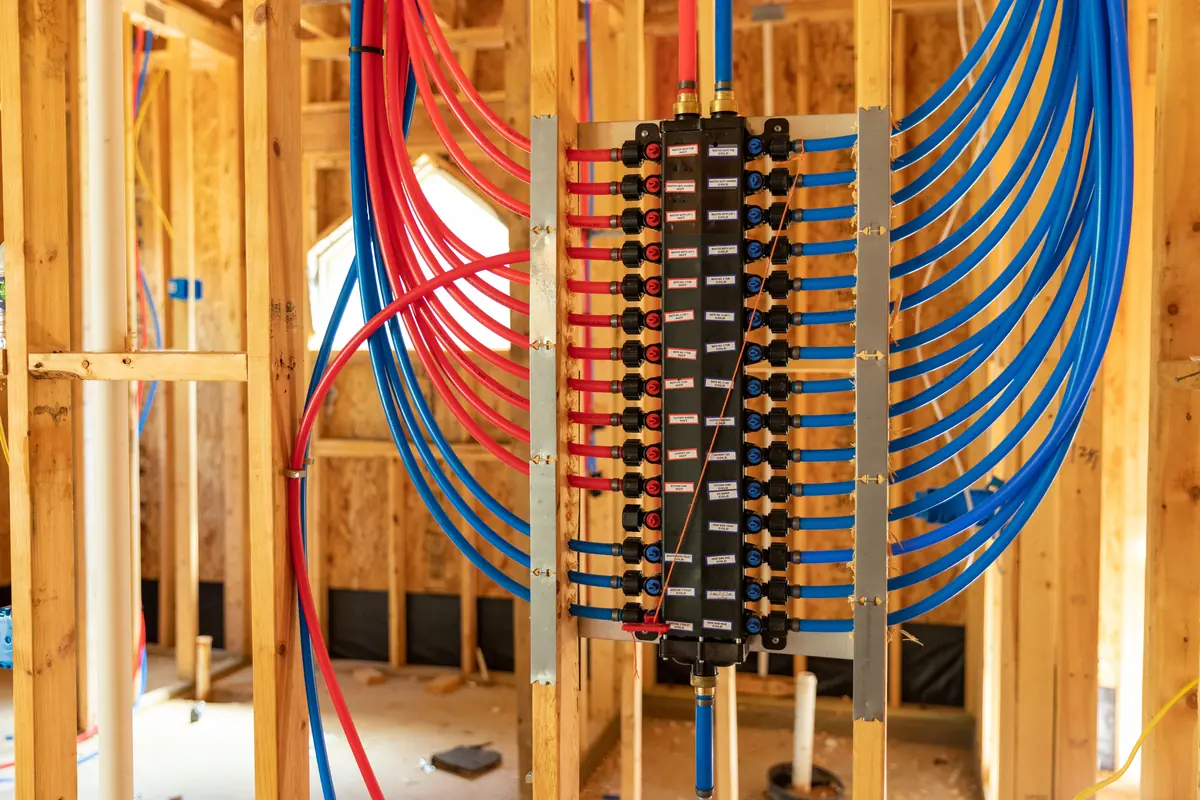
A repipe replaces the hot and cold lines inside the house, from the main to every fixture. It's worth it when galvanized pipe has choked the pressure, when copper keeps springing pinhole leaks, or when leaks come one after another.
On a slab house the new lines usually run through the attic and down inside the walls, so we cut small openings in the drywall at each fixture. On a pier-and-beam house, most of the work happens from the crawl space.
A typical house takes a few days, and we get your water back on at the end of each workday. When we're done, we patch the drywall openings so they're ready for paint.
PEX or copper?
Either one makes a good water line: PEX usually costs less and goes in faster, and copper has the longer track record and handles sun and heat that plastic can't.
| PEX | Copper | |
|---|---|---|
| Cost | Usually less, in pipe and labor | Usually more, in pipe and labor |
| Installing it | Bends through walls in long runs, so fewer fittings and fewer openings | Rigid, so more fittings and usually more wall to open |
| Hard freeze | Has some give and splits less often, but it can still burst | More likely to split when the water inside freezes |
| Sunlight | Has to be kept out of the sun | Fine in sun and heat |
| Track record | Newer, and common in homes built today | Used in homes for generations |
We'll tell you which one we'd put in your house and why.
Questions about water lines and repiping
What do I do if my pipes freeze?
Open the faucet on the frozen line and warm the pipe slowly with a hair dryer, a heating pad or a space heater kept away from anything that can burn, never an open flame.
Moving water helps melt the ice, so leave that faucet open and check the others too. If you think a pipe has split, shut off the main before it thaws. If you can't find the frozen spot, reach it or thaw it, call us.
At what temperature do pipes freeze?
Pipes in unheated spots like attics and crawl spaces start to freeze once it's about 20 degrees or colder outside, and sooner where wind gets at them through gaps or an outside wall.
How much does it cost to repipe a house?
It depends on the house: the number of bathrooms and fixtures, how spread out they are, slab or pier-and-beam, how much wall has to be opened, and PEX or copper.
We walk through the house first and give you a written price before any work starts. Call 903-000-0000 or request service online to set up a visit.