What hard water does to a house
Hard water carries a lot of dissolved calcium and magnesium. The U.S. Geological Survey doesn't consider it a health concern. How hard yours is depends on where it comes from: Bonham's lake water ranged from soft to very hard in the city's 2025 water report, while the Woodbine well water most rural systems in the county pump tests very soft. Where water is hard, it leaves minerals behind wherever it's heated or dries, and that shows up as:
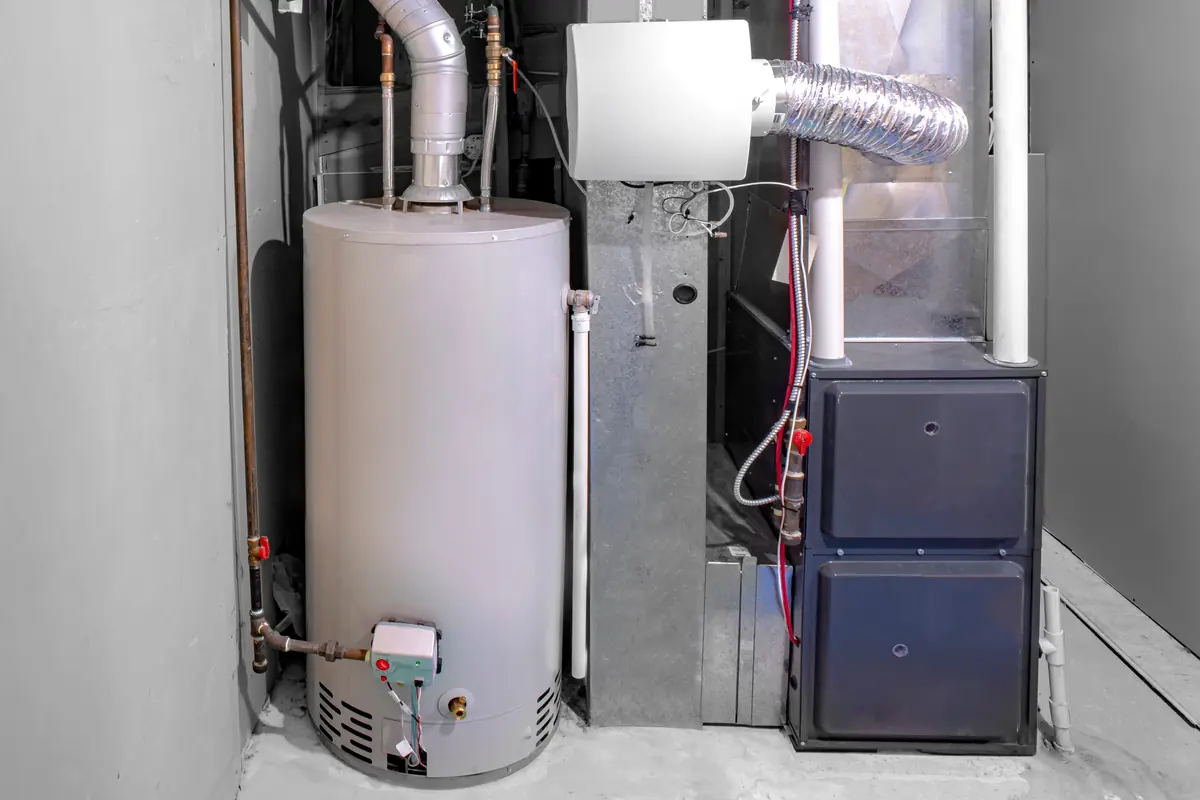
- Sediment that makes tank water heaters pop and wear out sooner
- Scale that clogs tankless heaters and means more descaling
- White crust on faucets, showerheads and glass shower doors
- Spots on dishes, and soap that won't lather
The USGS rates water up to 60 milligrams per liter of hardness as soft, 61 to 120 as moderately hard, 121 to 180 as hard and anything above 180 as very hard. Many cities list hardness in their yearly water quality report. If yours doesn't, a test will tell you.
Do you need a softener, a filter or reverse osmosis?
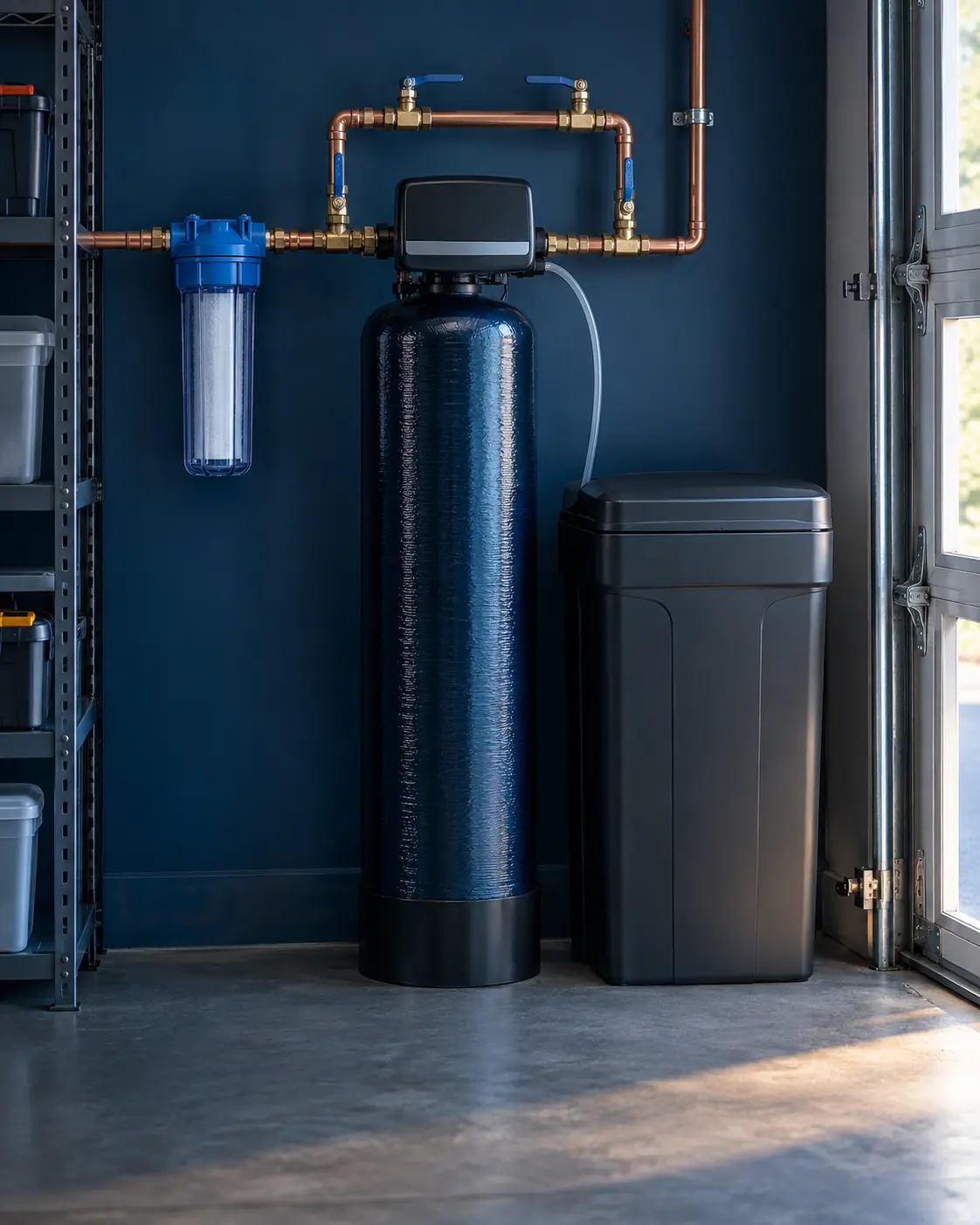
Pick by the problem: a softener treats hardness, a whole-house filter handles things like sediment, chlorine taste or iron, and reverse osmosis cleans up drinking water at one tap.
| Water softener | Whole-house filter | Reverse osmosis | |
|---|---|---|---|
| What it fixes | Scale, spots and crusty fixtures | Sediment, chlorine taste, or iron and sulfur, depending on the filter | Most dissolved minerals and salts in drinking water |
| Where it goes | Where water enters the house | Where water enters the house | Under the kitchen sink, with its own faucet |
| Upkeep | Add salt; it recharges itself | Change cartridges or media on schedule | Change filters on schedule and the membrane less often |
| Needs | A drain and usually an outlet | Room for the housing, sometimes a drain | Cabinet space and a drain connection |
Plenty of homes end up with two: a softener for the whole house and reverse osmosis at the kitchen sink.
City water or well water
On lake water like Bonham's, the usual complaints are hardness and a chlorine taste. The city treats and tests its water, so a softener, a carbon filter or both is enough for most homes. On the soft well water most other towns and rural systems here pump, a softener has little to take out. If that water tastes salty or leaves white spots, ask about a filter or reverse osmosis at the kitchen tap instead.
A private well is different. Nobody tests it unless the owner does, and well water can carry iron that leaves reddish-brown stains, manganese that leaves black ones, a rotten egg smell from hydrogen sulfide, heavy hardness, or several at once. Get a lab test before buying equipment. If you're building near Bois d'Arc Lake or anywhere else on a new well, test it before you move in.
A softener handles hardness and small amounts of iron. Heavier iron and sulfur need a filter made for them, installed ahead of the softener. A rotten egg smell from the hot side only points to the water heater's anode rod instead; see water heater repair.
How we set up a softener or filter
Find out what's in the water
We start with your city's water report or a test of your well. We check hardness and iron on site and send you to a lab for a full well test.
Size it to the house
Softener capacity depends on how hard the water is and how much your household uses. We install brands local supply houses carry, so filters and parts are easy to get.
Plumb it in
We add a bypass valve so the system can be taken offline for service, and run the drain line with an air gap so wastewater can't back up into it.
Set it and show you
We program the softener for your water and show you the bypass, the salt level and when filters are due.
Questions we hear about softeners and filters
Do I need a licensed plumber to install a water softener in Texas?
You need either a licensed plumber or a TCEQ-licensed water treatment specialist. Texas requires one or the other for anyone installing water treatment equipment for pay, and you can look up a plumber's license with the TSBPE license search.
Will a water softener make my water salty?
It adds some sodium, more with harder water, but it shouldn't taste salty. If someone in the house watches their sodium, use potassium chloride instead of salt, leave the kitchen cold tap unsoftened, or add reverse osmosis at the sink.
How often do I need to add salt?
Check the brine tank about once a month and keep the salt above the water line. How fast it goes depends on your hardness and how much water you use.
Can you work on a softener that is already installed?
Yes. We repair and service most softeners, including ones we didn't install. Common problems are a stuck control valve, a clogged brine line, salt crusted into a bridge above the water, or worn-out resin. We cover Bonham and the rest of Fannin County; request service and tell us what you're seeing.