Signs of septic trouble
Call before it turns into a backup if you notice any of these:
- Drains all over the house slow down at the same time
- Toilets gurgle when the washer or tub drains
- Sewage comes up in a tub or shower
- A sewer smell in the house or around the tank lid
- A soggy or extra-green patch between the house and the tank
- The alarm on an aerobic system keeps going off
- Trouble after a heavy rain that clears up once things dry out
Some of these mean a clog or a break in the line, and some mean the tank or the field needs attention. Figuring out which comes first.
Is it the line or the tank?
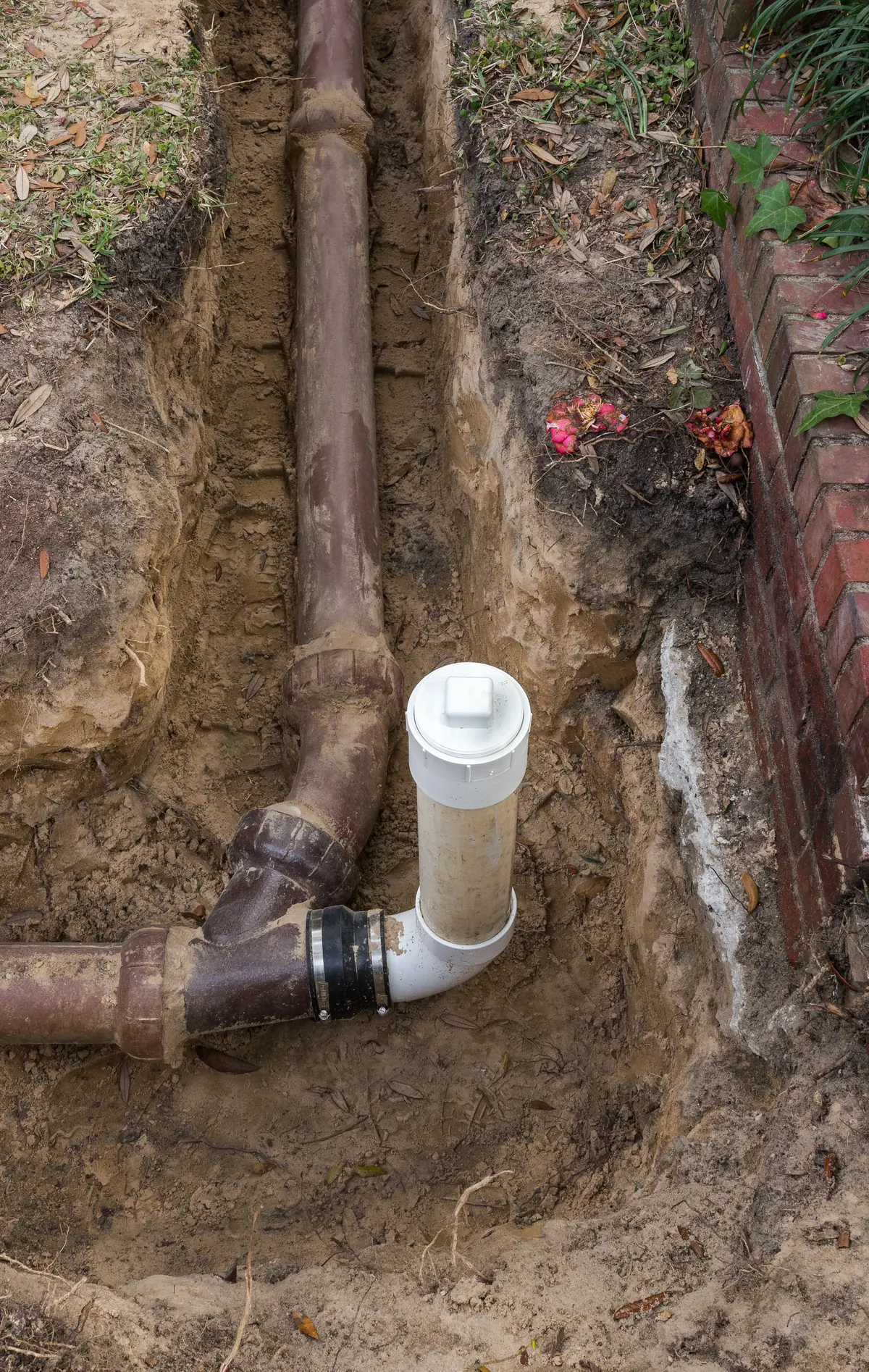
We start where the house plumbing meets the septic system. We open the cleanout, run a camera down the line when it's needed, and check whether waste is making it to the tank.
If the line is clogged, broken or sagging, we clear it or repair it. If the line is fine and the tank is full or the field is soaked, you'll hear that from us too, so you don't pay for the wrong fix.

Septic work we do
Backups and clogs
We clear the line from the house to the tank, whether it's grease, wipes, roots or years of buildup. More on drain cleaning.
Camera inspections
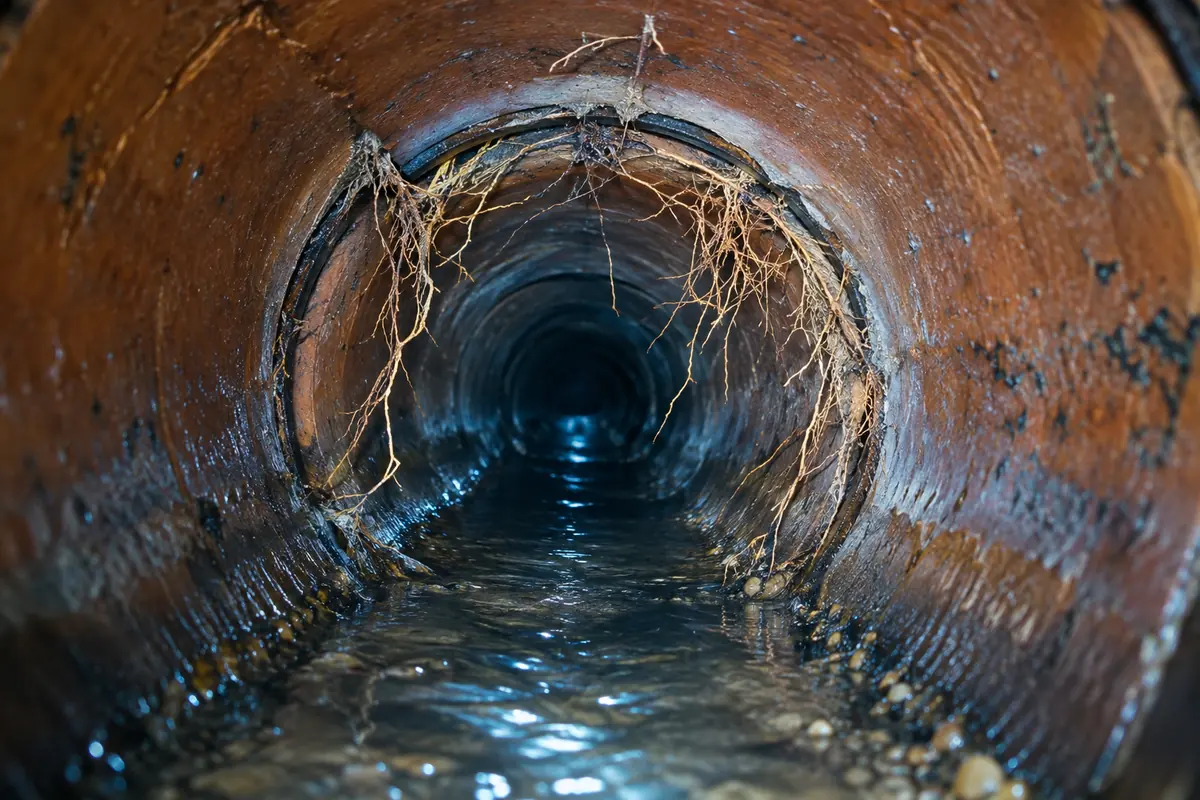
A camera shows roots, cracks, sags and broken joints in the tank line, and how far out the problem sits.
Line repair and replacement
We fix the bad spot or replace the pipe between the house and the tank, and add a cleanout where there isn't one. See sewer line repair.
New homes on septic
On a new build, we plumb the house and run the line out to the tank, working alongside your septic installer.
Pumping and tank repairs
Pumping a tank takes a hauler registered with the Texas Commission on Environmental Quality (TCEQ), and repairs to the tank or drain field take a TCEQ-licensed installer. When your system needs one of those, we'll tell you straight and point you to one.
The TCEQ's advice for septic owners says to have a standard tank pumped every three to five years.
Keeping a septic system healthy
Pump it on schedule
Every three to five years for a standard tank, and sooner with a big household or a garbage disposal.
Keep wipes and grease out
"Flushable" wipes, grease, paper towels and cat litter don't break down in the tank. They clog the line and fill the tank faster.
Go easy on harsh cleaners
Lots of bleach and chemical drain openers kill the bacteria the tank depends on. Skip the drain openers entirely.
Spread out the laundry
A load or two a day is easier on the system than a whole week's worth on Saturday.
Keep the field clear
Don't park or build over the tank or the field, and keep trees with big roots away from the line.
Septic questions
Why does my septic back up after a heavy rain?
When the ground around the field is soaked, it can't take any more water, so the tank backs up toward the house. Cut back on water until things dry out.
If it happens every time it rains, have the field checked, and have us look at the line in case a crack is letting groundwater in.
How do I find my septic tank?
Follow the sewer pipe out from where it leaves the house. The tank is often 10 to 25 feet out. Look for a lid, a riser or a low spot in the yard. On a spray system, the control box and sprinkler heads give it away.
If the system was permitted, Fannin County's environmental office in Bonham may have a drawing of it on file.
Can a water softener drain into a septic system?
Yes, if it's set up right. Texas septic rules call for a softener that drains to septic to regenerate based on how much water you use, not on a timer, and that's how we set them up. More on water softeners.
Do you work on septic homes outside Fannin County?
Yes. We work on septic homes in Grayson, Lamar and Collin counties too. Grayson County has its own rules, including an aerobic system on any lot under 2.5 acres.
Septic service across Fannin County
Outside Bonham and the county's other towns, most homes are on septic. We work on them from Leonard and Trenton to Honey Grove and Ladonia, plus Grayson, Lamar and Collin counties. The service areas page lists the towns.
Call 903-227-0170 and tell us what's happening: which drains are slow, whether anything is backing up, and when the tank was last pumped. Or request service online.